
What is sleep apnea?
“Snoring isn’t harmless. If it comes with nighttime breathing pauses, daytime fatigue, or trouble concentrating, sleep apnea may be the cause, a serious condition that should be detected early and treated effectively.”
Prof. H. Sailer
Snoring isn’t that bad, right?
Snoring is often harmless and not a health concern. But if it is accompanied by repeated breathing pauses, it should be taken seriously. In such cases, treatable sleep apnea may be behind it. An estimated one in five people in Switzerland has obstructive sleep apnea. And how does this condition show itself? Through snoring. That’s exactly the problem.
Obstructive sleep apnea vs. snoring
Distinguishing harmless snoring from a potentially life-threatening apnea is not particularly difficult. Sleep apnea is defined by a clear hallmark: a breathing disorder that becomes noticeable during sleep through pauses in breathing. If these last more than 10 seconds, it is called obstructive sleep apnea. A very serious condition that can lead to heart attack, stroke, depression, loss of libido, obesity, and other severe secondary illnesses.
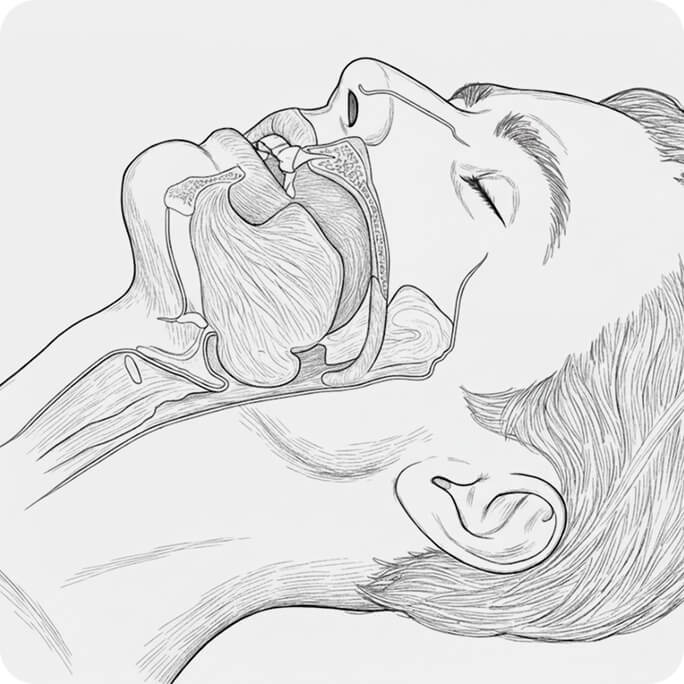
Why “obstructive”? The term comes from the Latin word obstructio (meaning “blockage”), which stands for closing off, barring, or clogging and in medicine describes a blocking process. In sleep apnea, we are talking about a breathing disorder caused by an obstruction of the airways. In the mouth and throat, certain muscles control the tongue and the soft back part of the palate during sleep. If these muscles are no longer strong enough, the tongue and soft palate “fall” downward. In obstructive sleep apnea (OSA), the throat narrows so much that no air can pass through. The result is an arousal response that doesn’t always lead to full awakening, but instead to heightened body activity, such as a faster pulse. Marked daytime sleepiness, high blood pressure, heart disease, and strokes are promoted as a result. But besides OSA, there are other sleep-related conditions with similar symptoms.
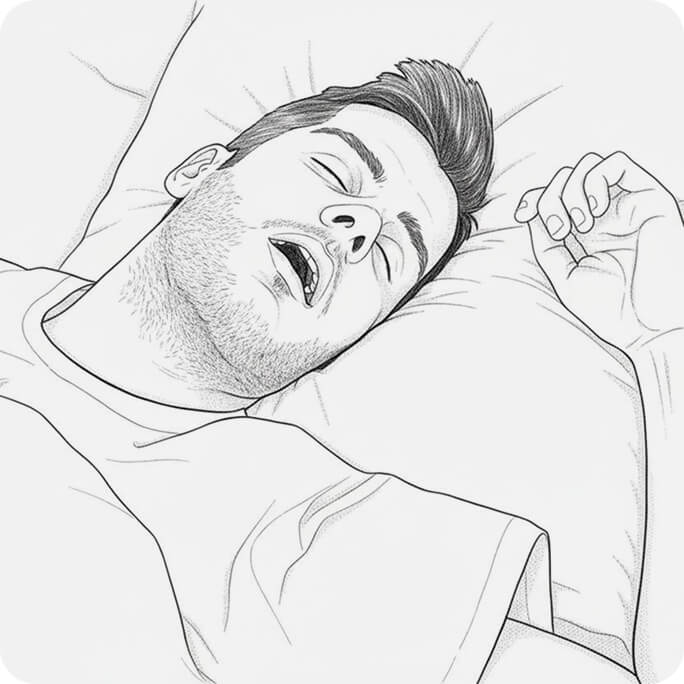
Sleep apnea (OSA)
Breathing pauses combined with loud snoring are early signs of sleep apnea.
Upper Airway Resistance Syndrome (UARS)
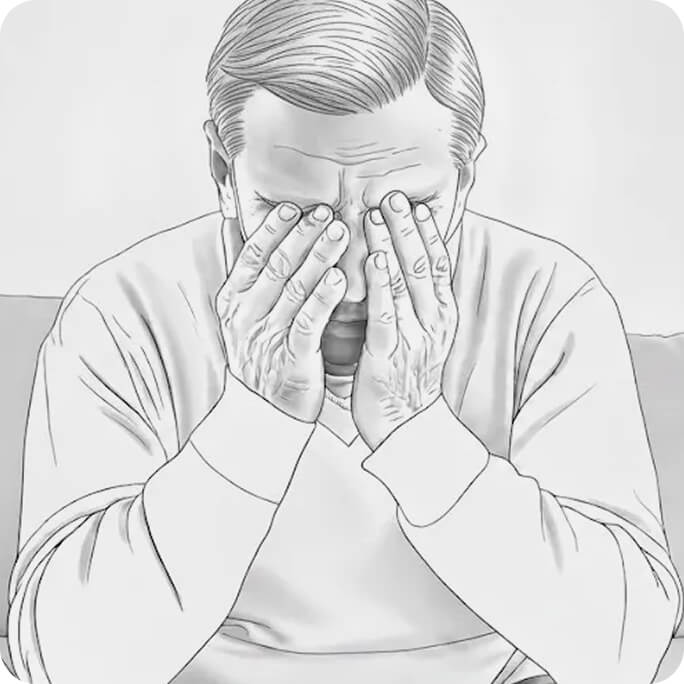
No breathing pauses, yet you still feel completely drained? That may point to UARS.
The two forms of sleep apnea
To ensure the body is reliably supplied with oxygen during sleep, the brain controls breathing rhythm through automatic reflexes.
In central sleep apnea, this control is disrupted: the brain temporarily fails to send sufficient signals to the breathing muscles, causing breathing pauses. The tongue, palate, and throat muscles function normally in principle. The problem lies instead in the neurological regulation of breathing.
In mixed sleep apnea, both mechanisms occur together. The breathing pauses begin like the central form, due to missing breathing impulses from the brain. As it progresses, an obstruction of the upper airways also develops, very similar to obstructive sleep apnea.
Why treating sleep apnea pays off twice
Sleep apnea often affects more than just the person with the condition. The partner also suffers significantly from the nightly snoring. Not rarely, the healthy partner develops sleep problems themselves, up to chronic insomnia, meaning a persistent sleep disorder. As a rule, it is women who suffer long-term from the nightly disruptions and the resulting strain on health and quality of life.
Two affected people are two good reasons to explore treatment options for sleep apnea. There is an alternative to the standard CPAP therapy that has been developed, which can make a complete cure of sleep apnea possible.